

Managing Psychosocial Hazards in the ACT: Compliance Guide
In the ACT, psychosocial hazard obligations are governed by the Work Health and Safety Act 2011 (ACT) and the Managing Psychosocial Hazards at Work Code of Practice, approved 27 November 2023. Psychosocial risk is now a standing item in WorkSafe ACT compliance audits: inspectors look for implemented systems, not just written policies.
Sector-Specific Guidance for the ACT
Psychosocial risk exposure varies significantly by sector. If you operate in one of the ACT's higher-risk industries, these resources apply the same regulatory framework to your specific operating context:
Check Your Compliance
A short set of questions on how hazards get identified, documented and reviewed today, scored against the ACT Code, with a gap analysis you can act on.
Where PsychProof sits in an ACT employer's toolkit
Survey tools stop at identification. Incident systems start after harm. PsychProof owns the step in between, the one WorkSafe ACT actually audits.
Regulation 55C makes the hierarchy of controls a legal requirement for psychosocial risk in the ACT, not just recommended practice. A survey tells you where the hazards are. An EAP or incident report responds after harm has occurred. Neither produces what WorkSafe ACT inspectors ask for in a standing audit: a dated record showing hazards were identified, controls were designed against the hierarchy, workers were consulted, and effectiveness was reviewed.
That is the gap most ACT employers have: not a lack of written policy, but a lack of provable implementation. PsychProof is built specifically for that step.
Legislative framework
How this differs from other jurisdictions
The hierarchy of controls is a legal requirement in the ACT: reg 55C brings psychosocial risks under Part 3.1, which includes reg 36's hierarchy of control measures, confirmed by WorkSafe ACT's own Code of Practice launch material. Find out more on our comparison page.
What inspectors look for in the ACT
WorkSafe ACT inspectors treat psychosocial risks as a standing audit item. They demand proof that written policies are practically implemented and measurable.
How PsychProof maps to ACT obligations
PsychProof allows employers to prove implementation of their policies, moving beyond aspirational declarations to verifiable records for WorkSafe ACT.
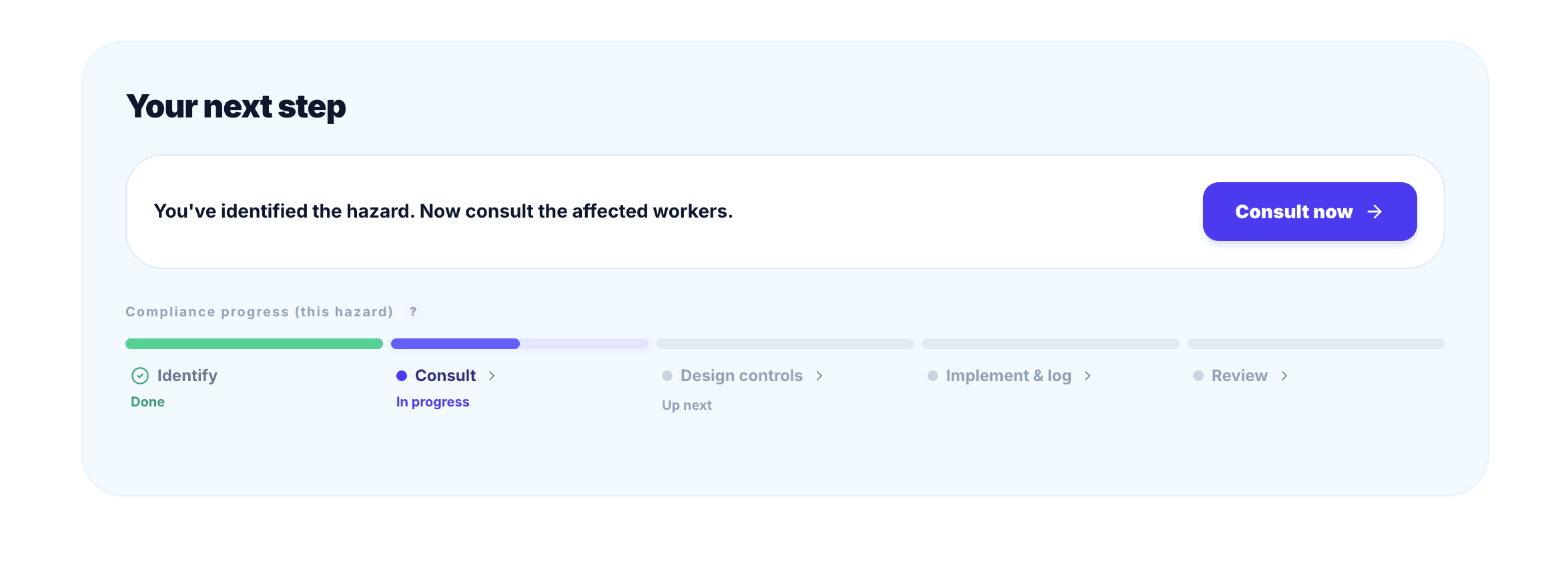
See what running this looks like for an ACT employer
PsychProof runs the ACT's hierarchy-of-controls risk process for every hazard and closes it with a dated review, the evidence trail WorkSafe ACT asks for.
What to read next
What does "psychosocial" actually mean?
The plain-English definition behind the Act and Code language on this page, and why the distinction from mental health and HR matters operationally.
A worked risk assessment example
See the identify-assess-control-review cycle applied to a real hazard, from first identification through to a closed, reviewed control.
Important Notice
This information is general in nature and provided for awareness and documentation support only. It does not constitute legal, clinical, or professional advice. Regulatory obligations vary by jurisdiction and circumstances. Organisations should refer to relevant regulators or qualified professionals for advice specific to their situation.