
Psychosocial Hazard Obligations in Victoria: What the OHS (Psychological Health) Regulations 2025 Actually Require
A practical guide to Victoria's standalone Psychological Health Regulations - the duties, the named hazards, the modified hierarchy of controls, and where Victoria diverges from the Model WHS jurisdictions.
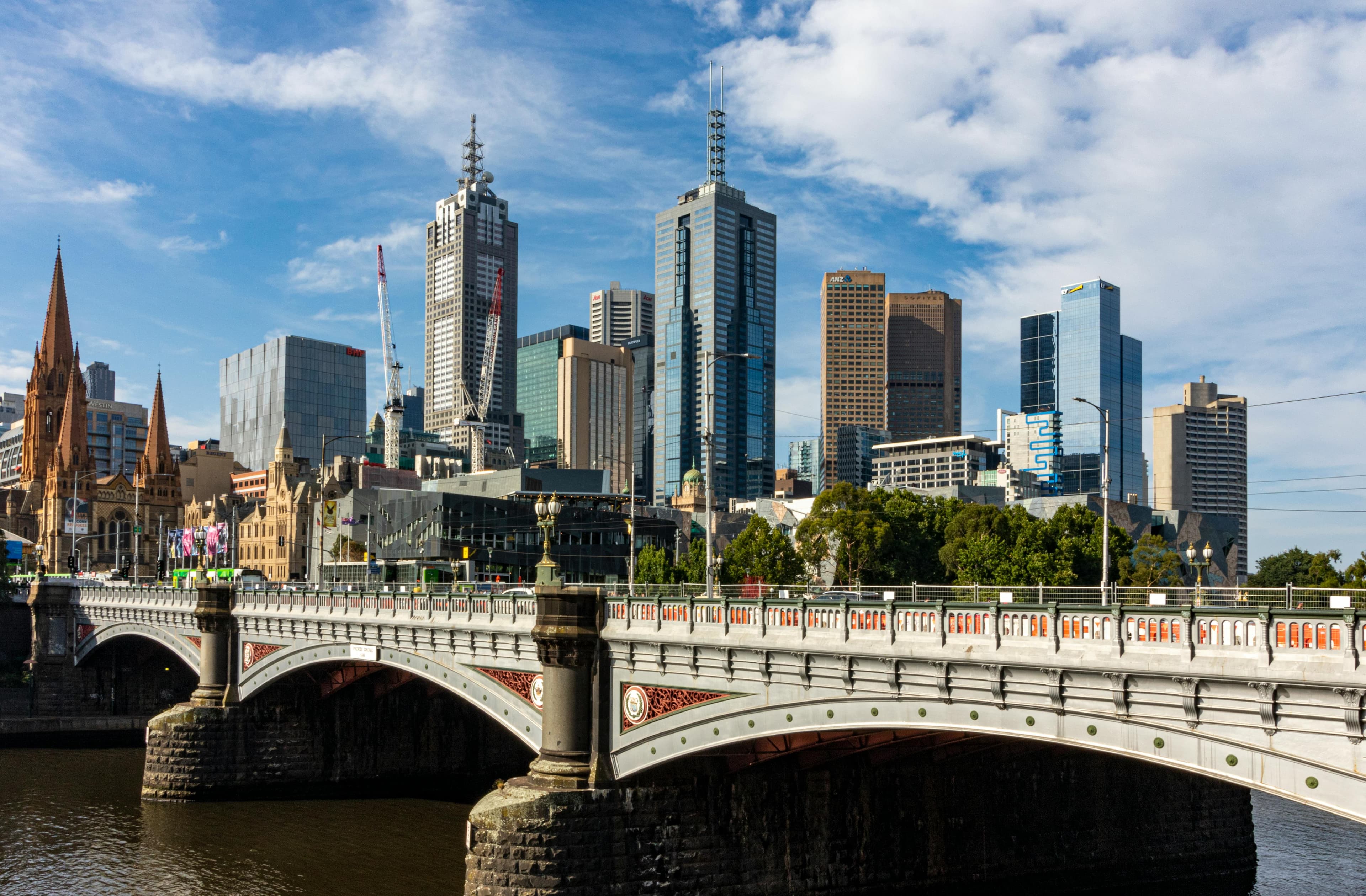
On 1 December 2025, the Occupational Health and Safety (Psychological Health) Regulations 2025 commenced in Victoria, completing a national shift in which every Australian jurisdiction now explicitly regulates psychosocial hazards. Victoria's approach is materially different from the Model WHS jurisdictions in several respects - the legislative architecture, the definition of a psychosocial hazard, the hierarchy of controls, and the named hazards it calls out. For HSEQ managers operating in Victoria, or running national programs that touch Victorian sites, the differences are not cosmetic. This article walks through what the Regulations actually require and where the Victorian framework diverges from what most national programs were designed around.
The legislative architecture
Victoria operates under the Occupational Health and Safety Act 2004 (Vic), not the Model WHS Act. The OHS Act has always treated "health" as including psychological health, and the general duty under section 21 - to provide and maintain a working environment that is safe and without risks to health, so far as is reasonably practicable - has always extended to psychological risk. What the new Regulations do is operationalise that duty for the specific case of psychosocial hazards.
Three pieces of the architecture matter:
- The OHS (Psychological Health) Regulations 2025 are standalone - they were not incorporated into the OHS Regulations 2017. This is deliberate and signals that WorkSafe Victoria expects the psychosocial framework to evolve on its own timeline rather than be tied to the broader OHS Regulations review cycle.
- The Compliance Code: Psychological Health (Edition 1, September 2025) sits alongside the Regulations. A breach of the Code is not itself a breach of the Act. But an employer who complies with the Code is taken to have complied with their duties under the Act and Regulations to the extent the Code addresses those duties. Courts and WorkSafe Victoria will treat the Code as evidence of what employers ought reasonably to know about psychosocial hazards when determining what is reasonably practicable.
- The Regulations apply to employees, independent contractors, and labour-hire workers. Both the labour-hire company and the host employer carry obligations under the Regulations to the extent each controls the matter.
Two requirements proposed in the 2022 exposure draft did not make it into the final Regulations: mandatory written prevention plans and six-monthly reporting of psychosocial complaints to WorkSafe Victoria for larger employers. WorkSafe still publishes a prevention plan template and encourages its use, but the documentation form is not mandated. The expectation that employers self-manage rigorous documentation, however, is heightened by the absence of a prescribed template.
The Victorian definition of a psychosocial hazard
The Regulations define a psychosocial hazard as any factor or factors in:
- work design;
- systems of work;
- the management of work;
- the carrying out of the work; or
- personal or work-related interactions that may arise in the working environment
that may cause an employee to experience one or more negative psychological responses that create a risk to the employee's health or safety. A "psychological response" includes cognitive, emotional, and behavioural responses and the physiological processes associated with them.
This definition is meaningfully broader than the Model WHS jurisdictions' formulation. Two differences stand out. First, the Victorian definition explicitly captures personal interactions arising in the working environment, not only work-related interactions. Second, it itemises the sources of risk - work design, systems of work, management of work, carrying out of work - rather than rolling them into a single category. The practical effect for HSEQ managers is that the Victorian framework casts a wider net over what counts as in-scope: interactions between employees and non-employees, and the structural conditions of the work itself, are explicitly captured.
The named hazards in the Compliance Code
The Compliance Code lists the following examples of psychosocial hazards (Part 1, paragraph 7):
- aggression or violence
- bullying
- exposure to traumatic events or content
- gendered violence
- high job demands
- low job control
- low job demands
- low recognition and reward
- low role clarity
- poor environmental conditions
- poor organisational change management
- poor organisational justice
- poor support
- poor workplace relationships, including interpersonal conflict
- remote or isolated work
- sexual harassment
- violent or traumatic events
Two items on this list are worth pulling out. Gendered violence is named as a standalone hazard category - a Victorian addition not separately called out in the Model WHS Code of Practice. The Compliance Code defines gendered violence broadly, ranging from comments, gestures, and innuendo through ostracism, exclusion, and discrimination based on sex, gender, gender identity, or sexual orientation, through to physical assault. It explicitly captures conduct via digital platforms and conduct that may not be directly connected to work but arises in the work environment.
Exposure to traumatic events or content is treated in the Code as including vicarious trauma - exposure that arises from hearing, viewing, or reading details of the traumatic experiences of others. The Code names several worker groups commonly exposed: first responders, emergency services workers, child protection workers, journalists, lawyers handling traumatic matter, complaint handlers, and content moderators. For employers in these sectors, the Code is explicit that the duty extends to managing cumulative vicarious exposure, not only one-off events.
The employer duties under the Regulations
Part 4 of the Regulations sets out the operative duties. An employer must, so far as is reasonably practicable:
- Identify psychosocial hazards in the workplace.
- Eliminate any risk associated with a psychosocial hazard.
- If elimination is not reasonably practicable, reduce the risk by applying the modified hierarchy of controls.
- Consult with employees and health and safety representatives during identification, control, and review.
- Review and revise control measures in prescribed circumstances.
- Ensure any installed control measure is properly installed, used, and maintained.
These are positive duties. The Regulations do not wait for a complaint or an incident; they require proactive management of foreseeable risk. WorkSafe Victoria has stated publicly that enforcement will be proactive and targeted, with routine inspection activity and increased investigation following reportable events. Improvement notices, prohibition notices, and prosecution are all on the table for non-compliance.
The modified hierarchy of controls
The Victorian Regulations apply a modified hierarchy of controls specifically tuned for psychosocial risk. If elimination is not reasonably practicable, employers must reduce the risk by altering - so far as is reasonably practicable:
- the management of work;
- plant;
- systems of work;
- work design;
- the workplace environment.
Only after these higher-order controls have been considered, and only if a residual risk remains, may information, instruction, or training be applied - and even then, information, instruction, or training cannot be the predominant control unless higher-order measures are not reasonably practicable.
This is a sharper restriction than the Model WHS approach, where training and information can be used more flexibly within the hierarchy. The practical implication for Victorian employers is that a controls register dominated by training programs, awareness campaigns, and EAP promotion will not satisfy the Regulations regardless of how comprehensive those measures are. The Regulations effectively require that work design, systems of work, and management of work do most of the protective work. Training fills the residual gap; it cannot do the load-bearing.
The six review triggers
The Regulations specify the circumstances in which an employer must review (and if necessary, revise) the control measures it has implemented. These triggers are explicit:
- before a change is made to a system of work, the workplace, plant, substance, or any other thing that is likely to give rise to a risk to psychological health and safety;
- when new or additional information about psychosocial hazards becomes available;
- when a notifiable incident occurs in connection with a psychosocial hazard;
- when an incident, complaint, or report is received about a psychosocial hazard or a psychological injury (including allegations of bullying, sexual harassment, or occupational violence);
- when requested by a health and safety representative;
- when, for any other reason, the risk control measures do not adequately control the risk.
The complaint trigger is the one that most often catches Victorian employers out. A report of bullying, sexual harassment, or occupational violence is not only a matter for HR investigation under the employer's grievance process - it is also a statutory trigger requiring the employer to review the psychosocial controls in place for the work group affected. The investigation and the controls review are separate processes with different objectives, but both must occur, and both must be evidenced.
Where Victoria diverges from Model WHS jurisdictions
For organisations running national programs, the divergence matters. Five points of difference summarise it:
- Different statutory architecture. Vic operates under the OHS Act 2004 and standalone Psychological Health Regulations 2025. NSW, QLD, WA, SA, Tas, ACT, and NT operate under Model WHS legislation with psychosocial provisions sitting in the WHS Regulations and the SWA Model Code of Practice.
- Broader definition. The Victorian definition explicitly captures personal interactions arising in the work environment and itemises sources of risk (work design, systems of work, management of work, carrying out of work). The Model WHS definition is more compact.
- Gendered violence named explicitly. Victoria calls out gendered violence as a discrete hazard category. The Model Code treats it under broader harassment and workplace relationship categories.
- Stricter hierarchy of controls. Victoria's hierarchy expressly restricts training as a primary control. The Model WHS approach permits more flexibility.
- Prescribed review triggers. Victoria itemises six specific review triggers. The Model WHS Code describes review obligations in more general terms.
For a national HSEQ program, the practical implication is that a controls framework designed for Model WHS jurisdictions may not satisfy Victorian requirements without adjustment, even when it appears well-built. The most common gaps we see are an over-reliance on training and EAP at the lower end of the hierarchy, insufficient documentation of higher-order work-design controls, and a complaint-handling process that does not also trigger the statutory controls review.
Why Victorian context raises the evidentiary bar
Three Victorian-specific factors raise the evidence threshold beyond what employers may be used to from other jurisdictions.
First, WorkSafe Victoria has stated explicitly that the Compliance Code will be treated as information about psychosocial hazards that employers ought reasonably to know. The "reasonably practicable" test is calibrated against the Code; an employer who has not engaged with the Code will find it difficult to argue that an unaddressed hazard was not foreseeable.
Second, while written prevention plans are not mandated, the absence of a prescribed template combined with the explicit review triggers means employers must self-manage rigorous documentation. The records that prove identification was done, consultation occurred, controls were applied through the hierarchy, and reviews were triggered at the right moments are the records that defend the organisation in inspection or prosecution.
Third, Victoria has a well-developed prosecution history in psychosocial matters. The Court Services Victoria prosecutions, the public sector psychiatric injury matters, and the increasing volume of psychological injury claims (WorkSafe Victoria has reported that work-related mental injuries represent approximately 18% of all new claims in 2023-24) mean the regulator has both the experience and the appetite to pursue enforcement under the new Regulations.
What HSEQ managers in Victoria should do now
If your organisation operates in Victoria, the practical priorities for the next quarter sit in four areas.
- Map your current state against the Compliance Code. For each of the named hazards in Part 1, paragraph 7, can you produce identification evidence, consultation records, current controls, and the most recent review? Most organisations have partial coverage, and the gaps are not evenly distributed. Gendered violence and vicarious trauma are the categories where coverage is most often thin.
- Re-tier your controls register through the modified hierarchy. If training and EAP are doing the load-bearing in your controls register, that register is fragile under Victorian requirements regardless of its quality elsewhere. Identify three higher-order controls (work design, systems of work, or management of work changes) you can implement in the next quarter, and document the rationale.
- Connect your complaint pathway to the review trigger. A bullying, sexual harassment, or occupational violence complaint is now a statutory trigger to review the controls in place for that work group, not just to investigate the individual matter. Confirm your operational process produces both outputs and timestamps both.
- Document the consultation cadence. Consultation in Victoria is required across identification, control design, and review. The records that prove consultation occurred - who was consulted, when, what was raised, what was done in response - are the most legally protective artefacts in the Victorian framework. Integrity-protected, time-stamped records of consultation outputs materially strengthen the defensibility of the program.
The bigger picture
The Victorian Regulations complete the national regulatory shift on psychosocial risk. Every Australian jurisdiction now requires explicit identification, control, and review of psychosocial hazards. Victoria is the last in chronological order but among the most prescriptive in substance - broader definition, stricter hierarchy, named hazard categories, prescribed review triggers, and a regulator with an active enforcement posture.
For organisations that have built a national psychosocial program on a Model WHS chassis, the question is not whether the program meets Victorian requirements in principle but whether the operational evidence will survive Victorian-specific scrutiny. The most common failure mode is a program that is well-designed at the policy layer and thin at the implementation and review layer. The Victorian Regulations are calibrated to expose exactly that gap.
For practitioners building or maturing infrastructure to meet these requirements, working through the full risk management framework and a worked example is the most direct way to surface where the gaps in your current Victorian operating model are.
Sophie Dudek
Researcher, PsychProof. Sophie researches psychosocial risk in Australian workplaces, translating regulatory developments and emerging evidence into practical guidance for WHS practitioners.